
Modafinil
-
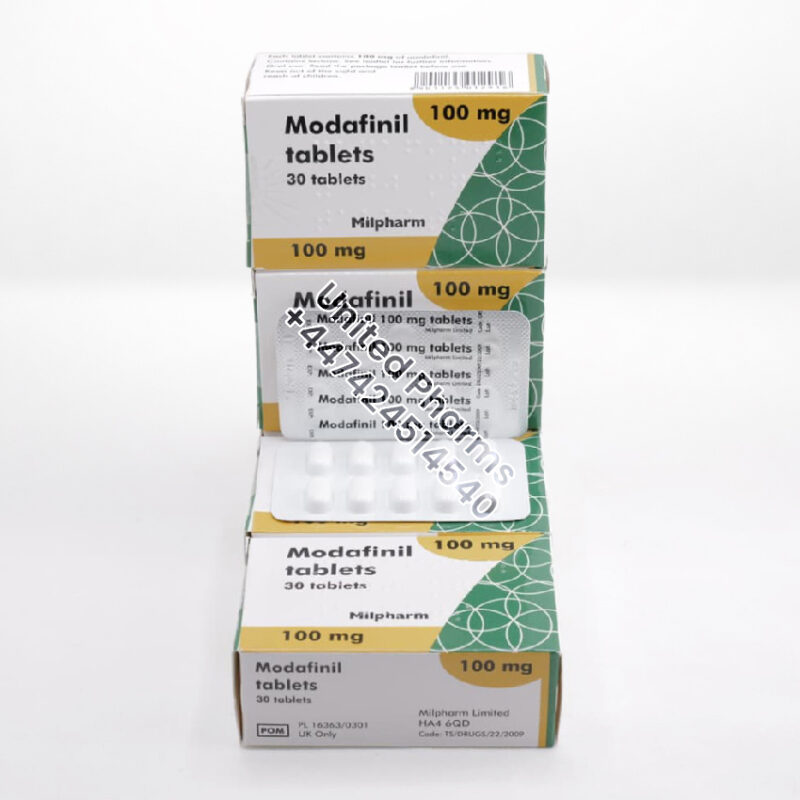
-
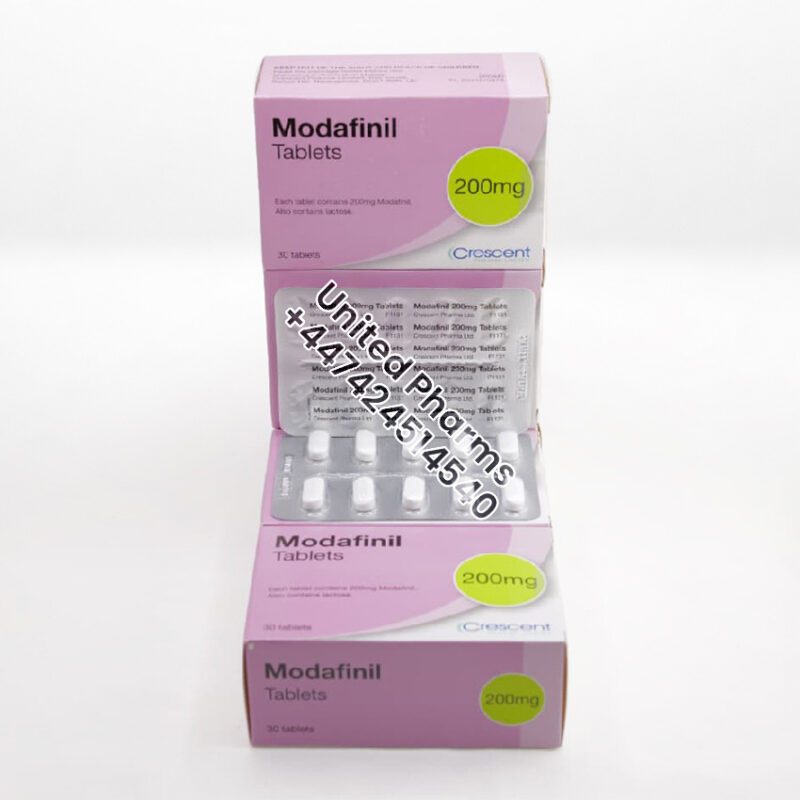
Modafinil 200mg | Crescent – (30 Tablets)
Original price was: £99.99.£39.99Current price is: £39.99.
End of content
End of content
Modafinil – Buy Online in UK/EU
Modafinil is a prescription-only wakefulness-promoting medicine used in the UK and EU to treat excessive daytime sleepiness in specific sleep disorders. Known for producing alertness without the classic stimulant profile of amphetamines, Modafinil is widely prescribed for conditions where improved daytime wakefulness is clinically required. It is also used off-label in some jurisdictions for fatigue associated with medical conditions and — controversially — for cognitive/occupational performance enhancement, which raises legal and ethical issues.
UK & EU Brands of Modafinil
Common brands and generic suppliers seen across UK/EU markets include:
Provigil® (original brand by Cephalon / Teva)
Modavigil® (Sun Pharma in some regions)
Modalert® (generic, widely distributed by various manufacturers)
Modvigil® (generic)
Teva Modafinil (generic)
Sandoz Modafinil
Mylan / Viatris Modafinil
Crescent / Milpharm generics
Brand availability varies by country and supplier; all prescription products should meet MHRA/EMA quality standards where authorised.
What Is Modafinil Used For?
Licensed / Primary Indications
Narcolepsy — to reduce excessive daytime sleepiness and reduce unwanted sleep attacks.
Obstructive Sleep Apnoea (residual sleepiness) — as adjunct therapy when CPAP/airway treatment does not fully resolve daytime sleepiness.
Shift Work Sleep Disorder (SWSD) — to improve wakefulness in people who must work night shifts.
Off-label / Investigational Uses (varies by country)
Fatigue management in certain medical conditions (some clinicians prescribe off-label).
Cognitive enhancement / increased alertness in demanding occupations (controversial and often discouraged without medical supervision).
How Modafinil Works (Plain Language)
Modafinil promotes wakefulness by altering neurotransmitter systems in the brain, including dopamine, orexin (hypocretin), histamine and adrenergic systems. It increases brain signalling that supports alertness and attention with a lower tendency to produce classic stimulant side effects (e.g., marked euphoria) compared with amphetamines. The precise mechanism is complex and not fully understood — it’s best described as a wake-promoting agent rather than a traditional stimulant.
Advantages of Modafinil
 Improves wakefulness without classic stimulant crash
 Improves wakefulness without classic stimulant crash
Often produces alertness with less jitteriness than amphetamine stimulants.
Lower abuse profile than many traditional stimulants
While not risk-free, addictive potential appears lower than amphetamines.
Useful where daytime sleepiness persists despite primary treatment
Approved adjunctive role in residual sleepiness with OSA and for narcolepsy.
May improve daytime functioning and quality of life in treated patients
Can reduce frequency of unintended sleep episodes and improve concentration.
Available in branded and generic forms
Makes access and cost more flexible across EU markets.
Disadvantages & Limitations
✘ Not a cure for underlying sleep disorders
It treats symptoms (wakefulness) but not the root cause (e.g., untreated OSA).
✘ Potential side effects and rare severe reactions
See side-effects section; skin reactions can be serious.
✘ Off-label use raises ethical, legal and safety concerns
Non-medical use (cognitive enhancement) may be unlawful or unsafe.
✘ Interactions with other medicines
Modafinil induces certain liver enzymes (CYP3A4) and can reduce the effectiveness of hormonal contraceptives and interact with many drugs.
✘ Prescription-only — not a self-care medication
Should only be used after clinical assessment and ongoing monitoring.
When NOT to Use Modafinil (General Safety Guidance)
Do not use Modafinil without medical advice. Discuss with a prescriber if any of the following apply:
Known allergy to Modafinil or armodafinil.
History of serious rash or hypersensitivity to wakefulness agents (Stevens–Johnson syndrome risk, though rare).
Uncontrolled or unstable heart disease (arrhythmias, recent myocardial infarction, severe angina) — use caution.
Severe hepatic impairment — dose adjustment or avoidance may be required.
Pregnancy or breastfeeding — avoid unless clinician advises (limited safety data).
History of psychosis or severe psychiatric illness — Modafinil can exacerbate anxiety, mania or psychosis.
Concurrent use of certain medicines (notably nitrates, some anticonvulsants, many psychotropics) without specialist advice.
If you rely on Modafinil for safety-critical jobs without medical oversight (aviation, rail, etc.) — legal/occupational rules may prohibit use.
Special note: Modafinil can reduce the effectiveness of combined hormonal contraceptives; vaccine counseling and contraceptive advice should be discussed with a clinician.
Side Effects / Symptoms to Watch For
Common, less serious and rare but serious reactions are listed — this is not exhaustive.
Common (may occur in some patients)
Headache (most commonly reported)
Insomnia or difficulty falling asleep
Nervousness, anxiety or irritability
Dry mouth
Gastrointestinal upset (nausea, indigestion)
Dizziness
Less common
Increased heart rate or palpitations
Elevated blood pressure
Tremor or sweating
Changes in mood or appetite
Rare but serious (seek urgent medical help)
Severe skin reactions (rash, blistering) — may signal Stevens–Johnson syndrome or toxic epidermal necrolysis (very rare but potentially life-threatening).
Psychiatric reactions — new or worsening psychosis, mania, hallucinations, severe anxiety or suicidal thoughts.
Serious cardiovascular events — in people with pre-existing heart disease.
Allergic reactions — swelling of face, tongue or throat, breathing difficulty.
If any severe or concerning symptom appears, stop the medicine and seek urgent medical attention.
FAQ: Modafinil (UK / EU)
1. Is Modafinil a controlled drug in the UK?
Modafinil is prescription-only (POM) in the UK and EU. Its legal scheduling differs internationally — it is not classically an illicit stimulant but must only be used under medical supervision.
2. Is Modafinil addictive?
Modafinil has lower addiction potential than amphetamine stimulants, but psychological dependence and misuse can occur. Use only under clinician oversight.
3. Can students or professionals use Modafinil to ‘boost’ studying or performance?
Off-label use for cognitive enhancement is controversial, may be unlawful depending on jurisdiction, and carries medical, ethical and occupational risks. It should not be used without medical indication and supervision.
4. Can I drink alcohol while taking Modafinil?
Alcohol may worsen side effects like dizziness and impair judgement—avoid heavy alcohol use. Discuss with your prescriber.
5. Does Modafinil affect contraception?
Yes — Modafinil can reduce the effectiveness of combined hormonal contraceptives (oral, patch, ring) by inducing liver enzymes. Women of childbearing potential should discuss alternative or additional contraception.
6. How quickly does Modafinil work and how long does it last?
Onset is typically within 30–60 minutes, with wakefulness effects lasting most of the daytime period; exact timing varies per individual and formulation.
7. Is Modafinil allowed in competitive sport?
No — Modafinil is on the World Anti-Doping Agency (WADA) prohibited list in-competition. Athletes must not use it without a Therapeutic Use Exemption.
8. Can Modafinil be used in children?
Use in children is limited and should only occur under specialist supervision for approved indications.
9. What monitoring is needed while taking Modafinil?
A prescriber will usually check symptom response, blood pressure, mood/psychiatric state, and review concomitant medications. Report new psychiatric or skin symptoms immediately.
Conclusion
Modafinil is a clinically useful wakefulness-promoting medicine with licensed roles in narcolepsy, shift-work sleep disorder and residual sleepiness from obstructive sleep apnoea. When prescribed and supervised by a clinician it can substantially improve daytime wakefulness and quality of life for people with these conditions. However, it is prescription-only, not risk-free, and has meaningful drug interactions (notably with hormonal contraceptives) and rare but serious adverse reactions (severe skin or psychiatric events). Off-label use for cognitive enhancement or workplace performance raises significant medical, legal and ethical concerns and is not recommended without a prescriber’s assessment.
For any patient-facing content, emphasise: do not self-medicate, always use a legitimate prescription, disclose all medicines you take to your prescriber, and report any worrying side effects immediately.