
Dihydrocodeine
End of content
End of content
Dihydrocodeine – Buy Online in UK / EU
Dihydrocodeine is a semi-synthetic opioid analgesic used for the treatment of moderate to moderately severe pain when standard painkillers like paracetamol or ibuprofen are insufficient. It is also occasionally used for chronic cough and breathlessness associated with severe illness, but pain relief is its primary indication.
Compared to Codeine, Dihydrocodeine is stronger, longer-lasting, and often better tolerated in patients who require step-up opioid therapy. It is available across the UK and EU as prescription-only medication.
Common UK & EU Brands of Dihydrocodeine
Dihydrocodeine is widely available under generic and branded names, including:
-
DF118 Forte (Dihydrocodeine 30mg tablets)
-
DF118 (older brand name still referenced clinically)
-
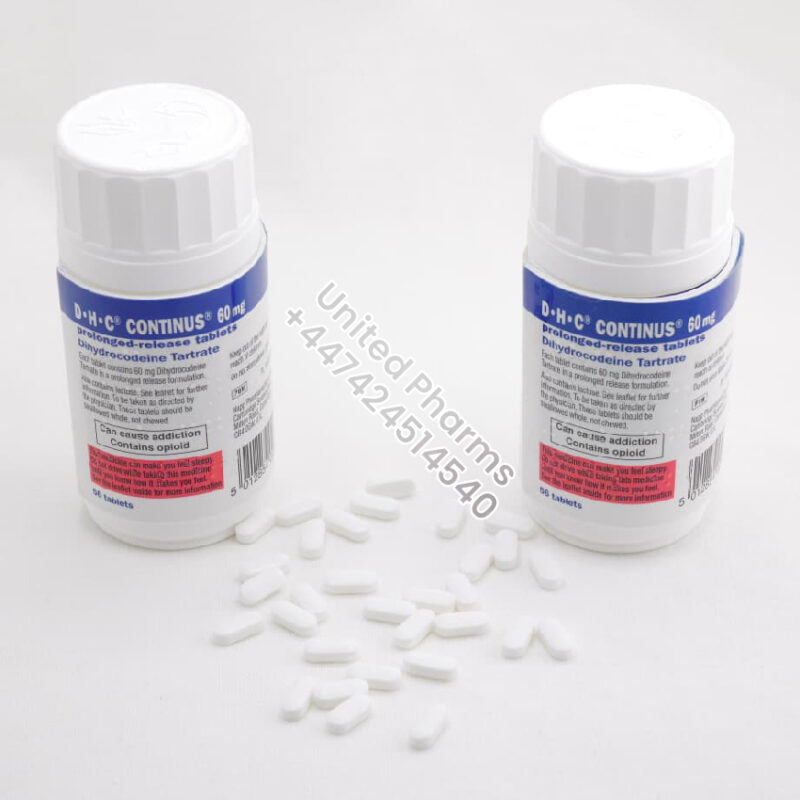
DHC Continus (Modified-release tablets: 60mg / 90mg / 120mg)
-
Zamadol DHC formulations (varies by country)
-
Almus Dihydrocodeine
-
Auden Mckenzie Dihydrocodeine
-
Wockhardt Dihydrocodeine
-
Teva Dihydrocodeine
-
Mylan Dihydrocodeine
-
Actavis Dihydrocodeine
Brand availability differs by region across the UK and European Union.
What Is Dihydrocodeine Used For?
Primary Uses
 Moderate to severe pain, including:
-
Musculoskeletal pain
-
Post-operative pain
-
Dental pain
-
Chronic back pain
-
Neuralgia
-
Severe menstrual pain
-
Pain from injury or trauma
Chronic cough management (rarely prescribed now) Breathlessness relief in palliative care settings
How Dihydrocodeine Works (Mechanism of Action)
Dihydrocodeine acts on mu-opioid receptors in the central nervous system to block pain signals and reduce the emotional reaction to pain.
It is metabolised to dihydromorphine, which is significantly active and provides stronger analgesia compared to Codeine.
Effects usually start within 30–60 minutes and last 4–6 hours (or longer for modified-release tablets like DHC Continus).
Advantages of Dihydrocodeine
 Stronger pain relief than Codeine
Ideal for step-up therapy when milder analgesics are not effective.
Available in modified-release forms
DHC Continus provides 12-hour relief, useful for chronic pain.
Lower incidence of nausea than some stronger opioids
Often better tolerated than morphine in sensitive patients.
Multi-use medication
Can help with pain, breathlessness, and cough suppression.
Flexible dosing and formulations
Immediate and extended-release options.
Disadvantages & Risks
Potential for dependence, misuse, and addiction
 Potential for dependence, misuse, and addiction
As an opioid, misuse risk is significant.
Side effects such as drowsiness and constipation
Very common and may require management.
Dangerous when combined with alcohol or sedatives
Can cause life-threatening respiratory depression.
Withdrawal symptoms
If stopped suddenly after long-term use.
Impaired concentration
Driving or operating machinery is unsafe.
Not suitable in people with certain metabolic issues
Like CYP2D6 ultra-rapid metabolisers.
When Not to Use Dihydrocodeine
Avoid Dihydrocodeine if you:
-
Have severe asthma, breathing issues, or COPD
-
Are allergic to Dihydrocodeine or any opioid
-
Have acute respiratory depression
-
Have paralytic ileus
-
Are pregnant or breastfeeding (unless specifically advised)
-
Have liver failure
-
Are taking MAOIs
-
Use alcohol, benzodiazepines, or other CNS depressants
-
Have obstructive sleep apnea
-
Are under 12 years old (contraindicated)
Symptoms & Side Effects
Common Side Effects
-
Constipation
-
Drowsiness
-
Dizziness
-
Nausea or vomiting
-
Dry mouth
-
Light-headedness
Less Common
-
Itching
-
Headache
-
Reduced appetite
-
Difficulty urinating
Seek urgent medical help if you experience:
-
Severe drowsiness or confusion
-
Breathing difficulties
-
Chest tightness
-
Blue lips, fingers, or slow heartbeat
-
Allergic reactions (rash, swelling, wheezing)
FAQ: Dihydrocodeine UK / EU
 FAQ: Dihydrocodeine UK / EU
1. Is Dihydrocodeine stronger than Codeine?
Yes. It typically provides stronger and more reliable pain relief.
2. Can I take Dihydrocodeine with paracetamol or ibuprofen?
Yes. It is commonly prescribed alongside non-opioid analgesics.
3. How quickly does it work?
Within 30–60 minutes, lasting 4–6 hours for immediate-release tablets.
4. Is Dihydrocodeine addictive?
Yes, especially with long-term or high-dose use.
5. Can I drive after taking Dihydrocodeine?
No — it causes sedation. UK drug-driving laws apply.
6. Can it be used for chronic pain?
Yes, especially with DHC Continus modified-release tablets.
7. Does Dihydrocodeine cause constipation?
Yes — almost all opioids do. Stool softeners or fibre often required.
Conclusion
Dihydrocodeine is a trusted and effective opioid analgesic for managing moderate to severe pain, particularly when first-line painkillers fail to provide relief. Its availability in both immediate-release and modified-release forms makes it suitable for acute and chronic pain conditions.
While highly effective, Dihydrocodeine must be used responsibly and under medical supervision due to risks of dependence, sedation, and respiratory depression. Knowing when to use it, how it works, and who should avoid it ensures safe and effective pain management.